
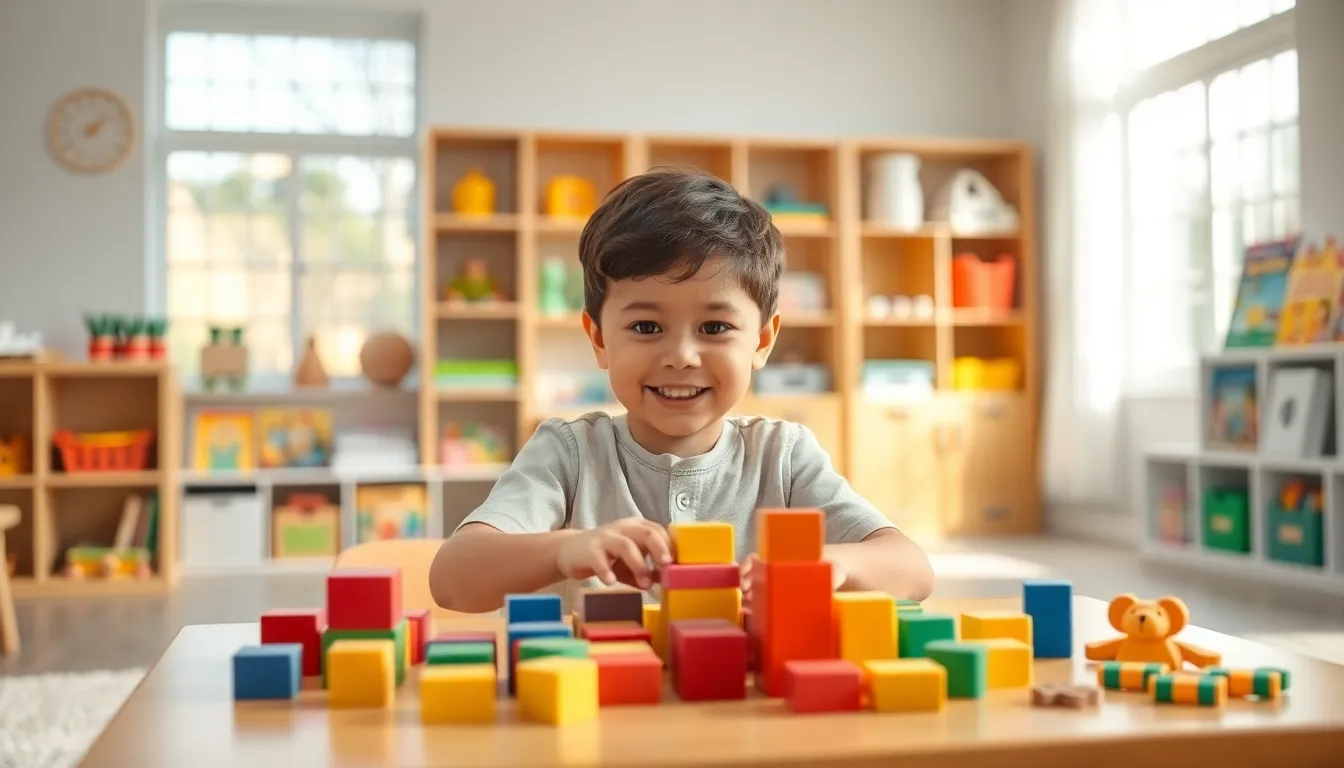
Early learning and play shape how children grow, think, and connect with the world around them. Research shows that play is not just fun, it builds the brain. Children who engage in regular play develop stronger cognitive skills, better emotional regulation, and improved social abilities.
The first five years of life represent a critical window for development. During this period, a child’s brain forms over one million neural connections every second. Play acts as the primary vehicle for this growth. It teaches problem-solving, creativity, language, and physical coordination, all while children enjoy themselves.
This article explores why play matters, the types of play that support learning, age-appropriate activities, and practical ways parents can encourage play-based learning at home.
Table of Contents
ToggleKey Takeaways
- Early learning and play build over one million neural connections per second in a child’s brain during the first five years of life.
- Play strengthens cognitive skills, emotional regulation, and social abilities while children enjoy themselves.
- Different types of play—free, structured, sensory, pretend, and physical—each offer unique developmental benefits children need.
- Age-appropriate activities maximize learning: infants thrive on sensory exploration, toddlers need hands-on toys, and preschoolers benefit from cooperative and imaginative play.
- Parents can support early learning and play by creating play-friendly spaces, following their child’s lead, and limiting screen time.
- Outdoor play and even messy or unstructured moments spark creativity and build essential life skills.
Why Play Matters in Early Childhood
Play serves as the foundation of early learning and play experiences. It’s how young children make sense of their environment, test boundaries, and build essential skills.
From a scientific standpoint, play activates multiple areas of the brain simultaneously. When a toddler stacks blocks, they’re practicing motor skills, spatial reasoning, and cause-and-effect thinking all at once. When two preschoolers pretend to run a restaurant, they’re developing language, cooperation, and executive function.
Cognitive Benefits
Play strengthens memory, attention span, and problem-solving abilities. Children who engage in regular play show improved academic readiness by kindergarten. Studies from the American Academy of Pediatrics confirm that play-based learning leads to better outcomes than rote instruction for young children.
Social and Emotional Growth
Through play, children learn to share, negotiate, and manage frustration. They practice empathy by taking on different roles and perspectives. A child who plays “house” with peers learns to read social cues and respond appropriately.
Physical Development
Active play builds strength, coordination, and gross motor skills. Even simple activities like running, climbing, and jumping help children develop body awareness and physical confidence. Fine motor play, like using crayons or manipulating small objects, prepares hands for writing.
Types of Play That Support Learning
Not all play looks the same, and different types offer distinct developmental benefits. Understanding these categories helps parents and caregivers provide balanced early learning and play opportunities.
Free Play
Free play happens when children choose their own activities without adult direction. This type builds creativity, independence, and self-regulation. A child deciding to build a fort from couch cushions exercises planning and decision-making skills.
Structured Play
Structured play involves rules or goals, like board games or organized sports. It teaches children to follow instructions, take turns, and handle winning or losing gracefully. Both types matter, children need a mix for healthy development.
Sensory Play
Sensory play engages touch, smell, sight, sound, and taste. Activities like playing with sand, water tables, or playdough stimulate neural pathways and support language development. Many speech therapists recommend sensory activities for children with communication delays.
Pretend Play
Also called imaginative or dramatic play, this type appears around age two and peaks between three and five. Children create scenarios, assign roles, and act out stories. Pretend play develops abstract thinking, a skill they’ll need for reading comprehension and math later on.
Physical Play
Running, jumping, dancing, and climbing fall into this category. Physical play releases energy, improves mood, and supports healthy sleep patterns. It also builds the vestibular system, which affects balance and spatial orientation.
Age-Appropriate Play Activities
Children’s play needs change as they grow. Matching activities to developmental stages maximizes the benefits of early learning and play.
Infants (0-12 Months)
Babies explore through their senses. Effective play activities include:
- Tummy time with colorful toys
- Peek-a-boo games
- Soft books with textures
- Rattles and musical toys
- Singing and talking during daily routines
At this stage, the caregiver is the best toy. Face-to-face interaction builds attachment and early communication skills.
Toddlers (1-3 Years)
Toddlers become mobile and curious. They benefit from:
- Stacking and nesting toys
- Simple puzzles with large pieces
- Play kitchens and tool benches
- Crayons and finger paints
- Sand and water play
- Push and pull toys
Toddlers engage in “parallel play,” where they play alongside peers rather than directly with them. This is developmentally normal.
Preschoolers (3-5 Years)
Preschoolers develop complex play skills. Good activities include:
- Dress-up clothes and props for pretend play
- Building sets like blocks or magnetic tiles
- Art projects with multiple materials
- Simple board games
- Outdoor exploration and nature walks
- Story creation and puppet shows
At this age, children begin cooperative play. They create shared games, negotiate rules, and form friendships through play interactions.
How Parents Can Encourage Play-Based Learning
Parents play a crucial role in supporting early learning and play. Small changes in daily routines can create rich opportunities for development.
Create a Play-Friendly Environment
Children don’t need expensive toys. They need accessible materials and space to explore. Keep a variety of open-ended toys available, blocks, art supplies, dolls, vehicles, and dress-up items. Rotate toys every few weeks to maintain interest.
Follow the Child’s Lead
Let children direct their own play when possible. Instead of showing them the “right” way to use a toy, observe what they discover on their own. Ask open-ended questions: “What are you building?” or “Tell me about your picture.”
Join the Play
When children invite adults into their games, accept the invitation. Get on the floor. Play the customer at their pretend store. This connection strengthens relationships and shows children that their interests matter.
Limit Screen Time
The American Academy of Pediatrics recommends avoiding digital media for children under 18 months (except video calls) and limiting screen use for ages two to five. Screen time displaces active play and face-to-face interaction, both essential for early learning and play development.
Prioritize Outdoor Play
Outdoor environments offer sensory experiences screens cannot replicate. Nature play supports attention, reduces stress, and encourages physical activity. Even a backyard or local park provides valuable exploration opportunities.
Embrace Mess and Boredom
Messy play teaches more than clean play. Let children get dirty sometimes. Similarly, don’t rush to fill every quiet moment. Boredom often sparks creativity, children who learn to entertain themselves develop stronger internal resources.


