
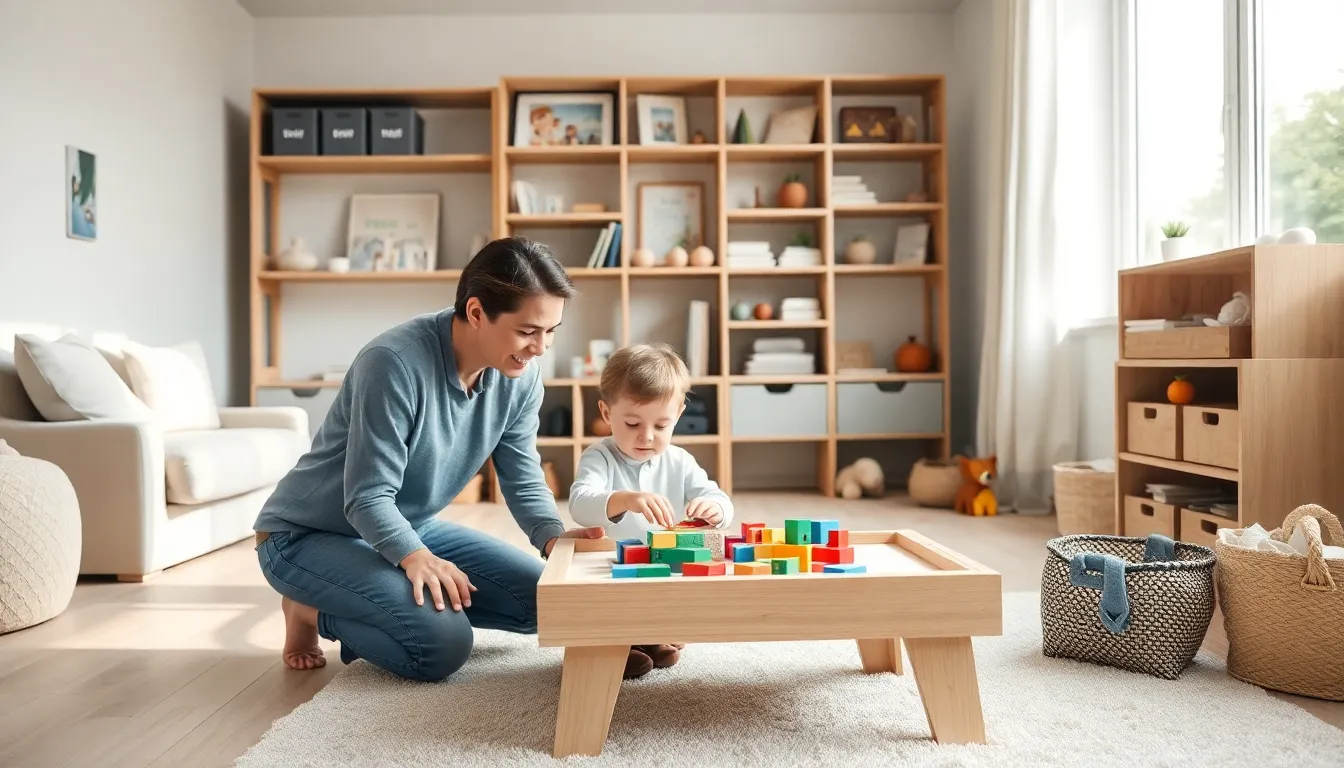
Early learning and play strategies shape how children grow, think, and connect with others. Research shows that play is not just fun, it’s essential brain-building work. Children who engage in meaningful play develop stronger language skills, better problem-solving abilities, and healthier social relationships.
The first five years of life represent a critical window for brain development. During this period, a child’s brain forms more than one million new neural connections every second. Play acts as the primary vehicle for this development. Parents and caregivers who understand effective early learning and play strategies can give children a significant advantage.
This guide covers why play matters, the different types of play that support learning, practical strategies for adults, and how to create play-rich environments at home.
Table of Contents
ToggleKey Takeaways
- Early learning and play strategies are essential for brain development, with children forming over one million neural connections per second in their first five years.
- Different types of play—physical, constructive, pretend, games with rules, and sensory—build distinct skills and should be balanced for well-rounded development.
- Follow your child’s lead and ask open-ended questions to encourage deeper thinking and keep motivation high during play.
- Unstructured free play sparks creativity and allows children to direct their own learning experiences.
- Create a play-rich environment with open-ended materials like blocks and cardboard boxes, rotating toys to maintain interest and focus.
- Limit screen time for children under five and prioritize hands-on, interactive play experiences for optimal early learning.
Why Play Matters in Early Childhood Development
Play serves as the foundation of early learning. When children play, they experiment with ideas, test boundaries, and build critical thinking skills. The American Academy of Pediatrics recognizes play as essential to healthy brain development.
During play, children practice communication. They learn to express needs, negotiate with peers, and interpret social cues. A toddler stacking blocks isn’t just passing time, they’re learning about gravity, balance, and cause-and-effect relationships.
Play also supports emotional regulation. Children process big feelings through pretend scenarios. A child playing “doctor” might work through fears about a recent medical visit. This kind of emotional processing builds resilience and coping skills.
Cognitive Benefits of Play
Play strengthens memory, attention span, and executive function. When children engage in games with rules, they practice impulse control. When they build with LEGOs or solve puzzles, they develop spatial reasoning.
Studies show that children who engage in regular play-based learning score higher on literacy and math assessments by kindergarten. These gains often persist through elementary school and beyond.
Social and Emotional Growth
Group play teaches children to share, take turns, and consider others’ perspectives. These skills form the basis of healthy relationships throughout life. Children who miss out on play opportunities often struggle with peer interactions later.
Types of Play That Support Learning
Different types of play build different skills. Understanding these categories helps parents and caregivers provide balanced play experiences.
Physical Play
Running, jumping, climbing, and dancing develop gross motor skills. Fine motor play, like threading beads or using scissors, prepares hands for writing. Physical play also releases energy and improves sleep quality.
Constructive Play
Building with blocks, sand, or craft materials teaches planning and problem-solving. Children learn to visualize outcomes and adjust when things don’t work. This type of play lays groundwork for mathematical and scientific thinking.
Pretend Play
Imaginative play, also called dramatic or symbolic play, develops language and creativity. When children pretend to run a restaurant or fly a spaceship, they practice storytelling, vocabulary, and abstract thinking. Pretend play peaks between ages three and five.
Games with Rules
Board games, card games, and organized sports teach children to follow instructions and handle winning and losing. These activities build patience and strategic thinking. Even simple games like “Red Light, Green Light” reinforce impulse control.
Sensory Play
Activities involving water, sand, playdough, or textured materials help children process sensory information. Sensory play calms the nervous system and supports cognitive development. It’s particularly beneficial for children with sensory processing differences.
Effective Strategies for Parents and Caregivers
Adults play a crucial role in supporting early learning through play. The goal isn’t to direct every activity, it’s to create conditions where meaningful play can happen.
Follow the Child’s Lead
Children learn best when they’re interested. Watch what captures their attention and build on it. If a child loves dinosaurs, incorporate dinosaurs into counting games, art projects, and storytelling. This approach keeps motivation high.
Ask Open-Ended Questions
Instead of asking “Is that a house?” try “Tell me about what you’re building.” Open-ended questions encourage deeper thinking and longer conversations. They show children that their ideas matter.
Provide Unstructured Time
Children need free play without adult agendas. Boredom isn’t bad, it often sparks creativity. Resist the urge to fill every moment with structured activities. Some of the best early learning happens when children direct their own play.
Balance Screen Time
Digital play has a place, but it shouldn’t replace hands-on experiences. The American Academy of Pediatrics recommends limiting screen time for children under five. When screens are used, interactive educational content works better than passive viewing.
Play Together
Joint play strengthens bonds and models social skills. Get on the floor with children. Be silly. Let them see adults having fun. This shared joy builds secure attachments that support all areas of development.
Creating a Play-Rich Learning Environment at Home
The physical environment shapes play possibilities. A well-designed space invites exploration and supports early learning strategies.
Designate Play Zones
Create specific areas for different types of play. A cozy reading corner, a building area, and a space for messy art activities help children focus. Clear organization also makes cleanup easier.
Choose Open-Ended Materials
Blocks, scarves, cardboard boxes, and art supplies can become anything. These materials encourage imagination more than single-purpose toys. A simple cardboard box might become a car, a house, or a rocket ship across multiple play sessions.
Rotate Toys
Too many options overwhelm children and shorten attention spans. Keep some toys in storage and rotate them every few weeks. “New” old toys spark fresh interest and extend play value.
Make Materials Accessible
Store toys and supplies where children can reach them independently. Low shelves, clear bins, and picture labels help young children choose activities and clean up without constant adult help. This independence builds confidence.
Include Nature
Bring outdoor elements inside, pinecones, shells, leaves, and stones make excellent play materials. Outdoor play itself offers unique benefits. Natural settings reduce stress and encourage physical activity.
Limit Visual Clutter
Calm environments support focus. Avoid rooms packed with bright colors and busy patterns. Neutral backgrounds let children’s own creations stand out. Simple spaces feel more peaceful for everyone.


